Beautiful Thinking.
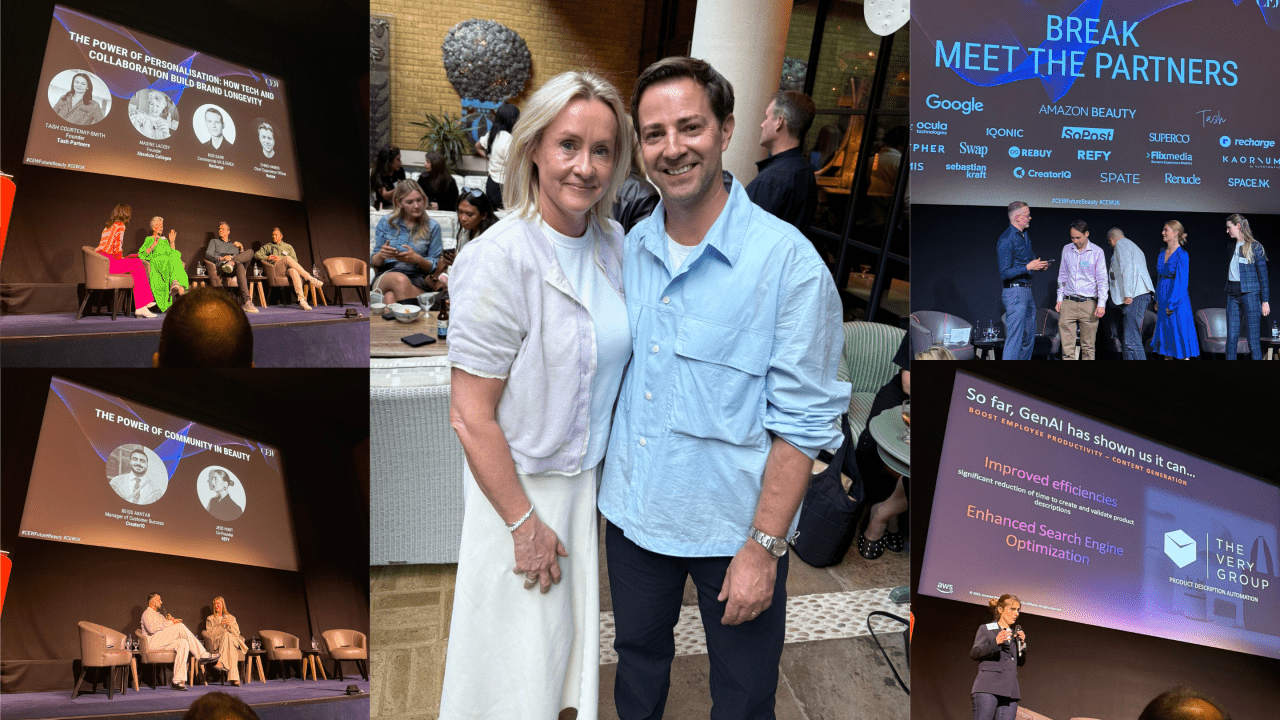
If CEW’s Future Beauty Summit 2025 made one thing clear, it’s this: the beauty industry is entering a new era. One where trust, technology, and hyper-personalisation sit at the heart of brand building.
Across a packed day of panels, provocations and real-world case studies, we heard from leading voices in AI, e-commerce, sampling, brand strategy and social listening.
Here are the standout signals every beauty brand should be paying attention to:
Forget the doomsday narratives. The most progressive brands aren’t using AI to replace creativity – they’re using it to clear space for it. As Luisa Bertoli – Generative AI Strategist at Amazon Web Services – explained:
“By 2026, most digital teams will have a dedicated AI team member.”
AI agents can handle the repetitive, data-heavy, cross-channel complexity of product content, personalisation and even compliance. That means human teams can do what they do best – craft, storytelling and meaning. Not spreadsheets. These tools have become invaluable time-saving weapons in a creative team’s arsenal, especially in an era where time is precious and micro-trends come and go at lightning pace.
Ocula Technologies showed just how far we’ve come: with AI-powered PDPs, brands can now produce content that is SEO-optimised, brand-compliant, platform-tailored and 10x faster to market. All without losing their soul.
36% of eCommerce traffic now lands directly on PDPs (Product Detail Pages), thanks to TikTok swipe-ups, Instagram ads, WhatsApp links and creator content. As Aimee Taylor from Ocula put it:
“PDPs are often your only impression. You need to make it count.”
Too often, they’re rushed, under-optimised and repurposed from global templates. Today, brands must create PDPs that are channel-specific, emotionally resonant, and structurally searchable by the next generation of search engines – AI agents, chatbots and conversational searches facilitated by voice assistants – all of whom need to be able to immediately understand what we’re asking of them and deliver what the customer is looking for…while they’re still working it out for themselves.
Jonny Grubin from SoPost shared the stat that had the whole room murmuring:
“Only 1 in 20 consumers trust what’s being shared with them online.”
Whilst many across generations spend their time chronically online today, there remains a healthy dose of craving for simpler times. And when I say simpler times, I mean even just a few years ago, when the early years of social media birthed the first wave of influencers and the concept of creator engagement was kicking off.
Influencer fatigue, AI-generated content, paid creator endorsements and TikTok Shop oversaturation are all contributing to what Grubin called “a perfect storm of apathy.”
But trust can be rebuilt through community, trial, and authenticity. Sampling, peer recommendations, and UGC on product pages now hold more sway than the most polished creator campaign.
And when it comes to influence?
“We don’t need bigger influencers. We need better ones.”
Sebastian Kraft’s Practical Use of AI in Beauty panel made one thing clear: AI is only as valuable as the problem it’s solving.
Some hero examples discussed include:
The result? AI that enables real, measurable consumer benefits, from fewer returns to richer CRM journeys.
Stats show that there are approximately 498 billion TikTok beauty views in the UK alone. That’s 7,000 views per capita.
As Olivier Zimmer of Spate showed, TikTok is the largest living focus group in beauty…and the trends are shifting fast:
The key takeaway? Consumers are turning to TikTok not just for entertainment, but for concern-based, trusted solutions.
We’re entering a more technologically capable, but also more emotionally complex era of beauty. Consumers want brands to be fast, but also human. Bold, but credible. Personal, but not invasive.
AI must be embraced as a collaborator, not a cost-cutter. PDPs should perform like flagships, not a footnote that feels like afterthought. And authenticity and consistency are key – from building trust through community, to using platforms like TikTok as a source of truth…not just trends.