
Beautiful Thinking.
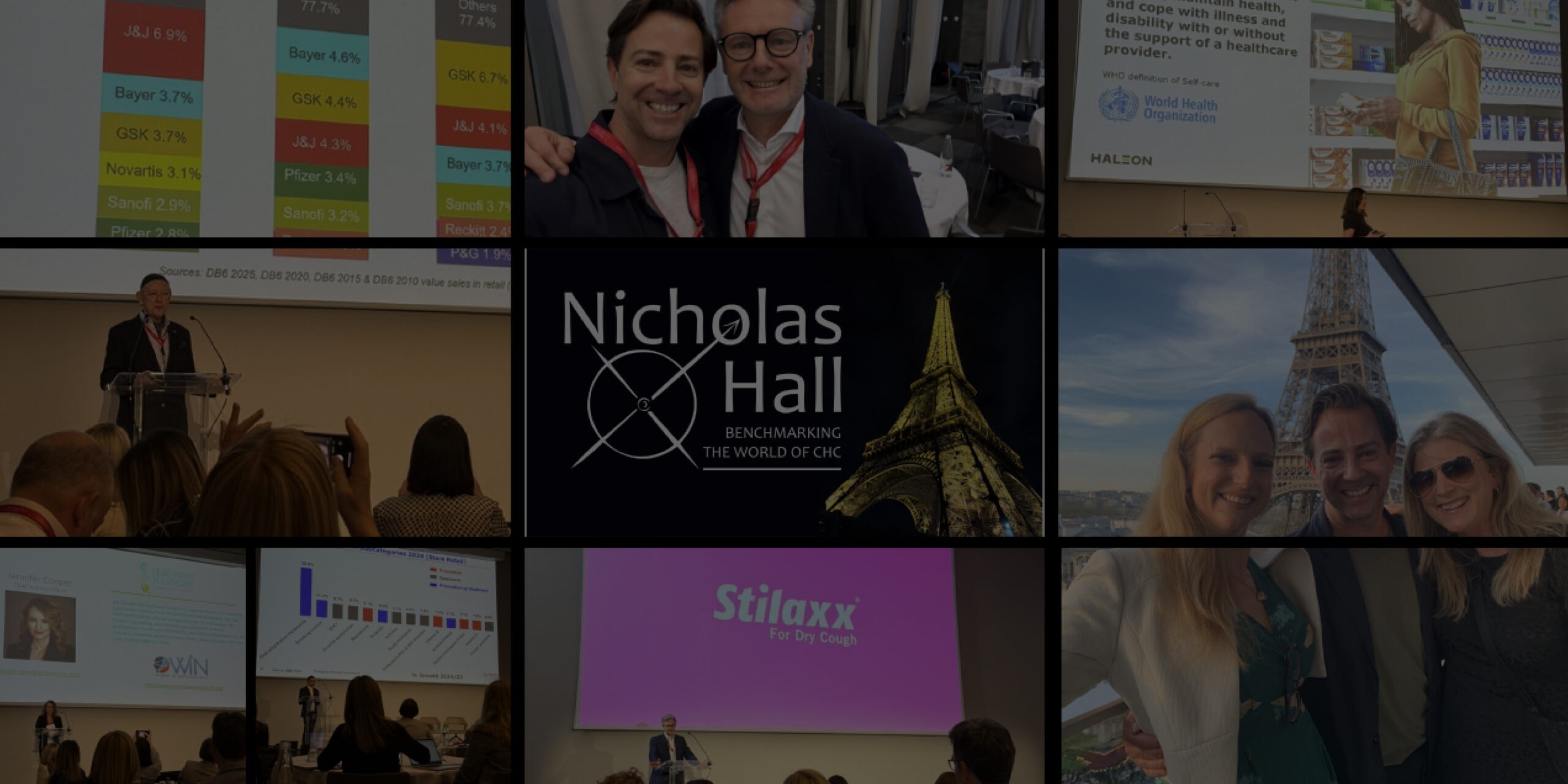
When Nicholas Hall opened this year’s CHC Conference in Paris with his usual sharp insights and humour, it was clear we’re standing at a crossroads for the industry. While the data showed continued growth—4.6% in 2024, respectable by any historical standard, the message was unmistakable: this is not business as usual.
It was a discussion which provided insights and statistics demonstrating the power of lifestyle and longevity in reshaping how we live well today – the focus and discussion of our latest trend forecasting report, Crowsnest Health & Longevity.
We’re entering a new era of consumer health, shaped by macroeconomic pressure, changing consumer expectations, and a redefinition of what it means to be “well.” And in that environment, brand strategy and design must evolve fast to stay relevant.
Consumer Health has long leaned on product-first messaging—efficacy, science, molecules. That’s not going away, nor should it. But as Hall noted, we’re shifting from a “sickcare” model to a wellness economy, where brands are expected to support prevention, emotional wellbeing, and lifestyle improvement, not just symptom relief.
This demands a new language—less pharmacological, more human. Brands must now speak to how people want to feel, not just what they want to fix. In weight loss, mental wellbeing, and sleep, the top unmet needs identified in the presentation, emotional insight is just as important as clinical formulation.
In a crowded, often undifferentiated market (with 74% of CHC product launches offering no point of difference), brand design becomes the trust signal. But the visual codes of trust are evolving.
Today’s consumer looks for simplicity, clarity, and credibility—but not at the expense of personality – topics which our Creative Lead for Healthcare, Mike Peacock, identified in our Crowsnest report. The brands that win are those that look and feel like they belong in a bathroom cabinet, a gym bag, or an Instagram feed.
Design is no longer about looking “medical.” It’s about expressing purpose, care, and confidence—instantly and intuitively. Nicholas Hall’s reference to promising innovations from companies like Valbiotis came with a pointed aside about poor pack design. A timely reminder: innovation without relevance and design coherence risks being overlooked.
One of the most resonant data points from Hall’s keynote was that a third of consumers feel excluded from health and wellness due to price. This is both a challenge and a brief for brand builders.
Brand equity doesn’t mean premium pricing. It means creating perceived value. Accessible wellness brands must still look elevated, credible, and desirable. And that’s where smart design—packaging, architecture, tone—can play a critical role in democratising access without diluting experience.
In 2024, we saw fewer CHC product launches—but better ones. The message? Quality over quantity wins. In an age of retail rationalisation and DTC brand fatigue, it’s time to focus on clear portfolios, bold positioning, and compelling narratives.
Brands must be ruthless in focusing on what they do best, and brave enough to do fewer things better. A cleaner shelf, a tighter portfolio, and a stronger story will outperform scattered innovation every time.
In an era of geopolitical tension, economic contraction, and demographic flux, consumers are looking for brands that stand for something. Not just “relieve pain,” but “help me feel like myself again.” Not just “aid sleep,” but “help me take back my nights.”
As we see more brands move from molecules to meaning, from function to feeling, the design community has never been more critical to the CHC industry’s future.
At Free The Birds, we believe in helping brands fly higher by being clearer, brighter, and more beautiful. In this new world of wellness, that’s not just good design – it’s good business.
To discover more on this fascinating subject – and how you can put these learnings into action – make sure to grab your free download of our new Crowsnest report, Health & Longevity, available here: https://freethebirds.com/crowsnest/health-longevity-trends/